PepKeep › How to reconstitute a peptide vial and draw a dose
How to reconstitute a peptide vial and draw a dose
Twelve pictured steps: mix the vial, work out your units, and draw your dose on a U-100 insulin syringe. The same guides that play inside the PepKeep app.
Example used throughout: a 10 mg vial mixed with 2 mL of bacteriostatic water, drawing a 1 mg dose on a 100-unit (1 mL) U-100 insulin syringe. These are example numbers to show the technique, not a recommended dose. Use your own vial, water and the dose from your protocol.
What you need
- Your peptide vial (powder) and a vial of bacteriostatic (BAC) water
- U-100 insulin syringes
- Alcohol pads
- A pen to date the vial label, and room in the fridge
Part 1: Mix the vial
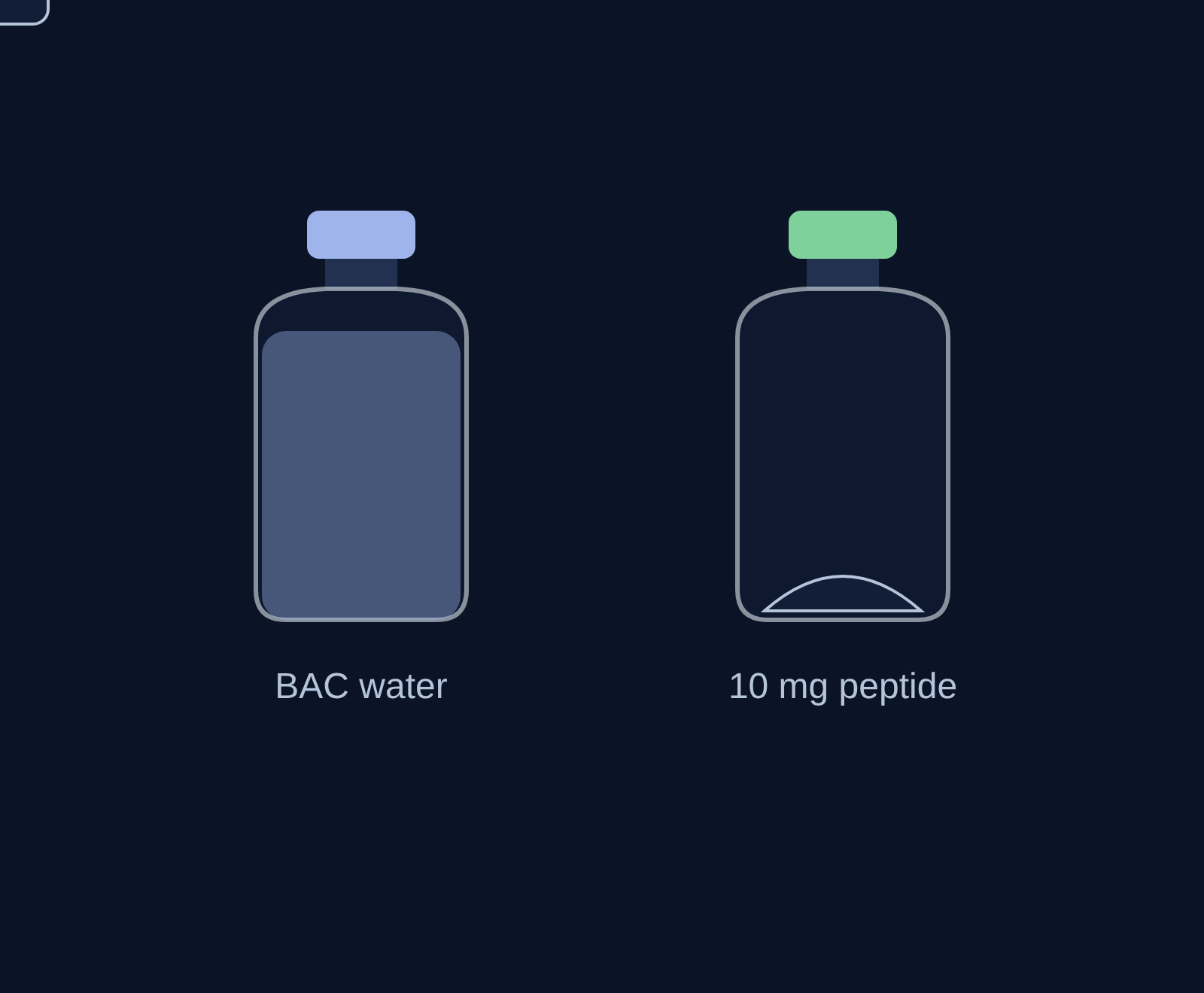
Wipe both rubber tops
Clean the top of the bacteriostatic water vial and your peptide vial with an alcohol swab. Let them air-dry.
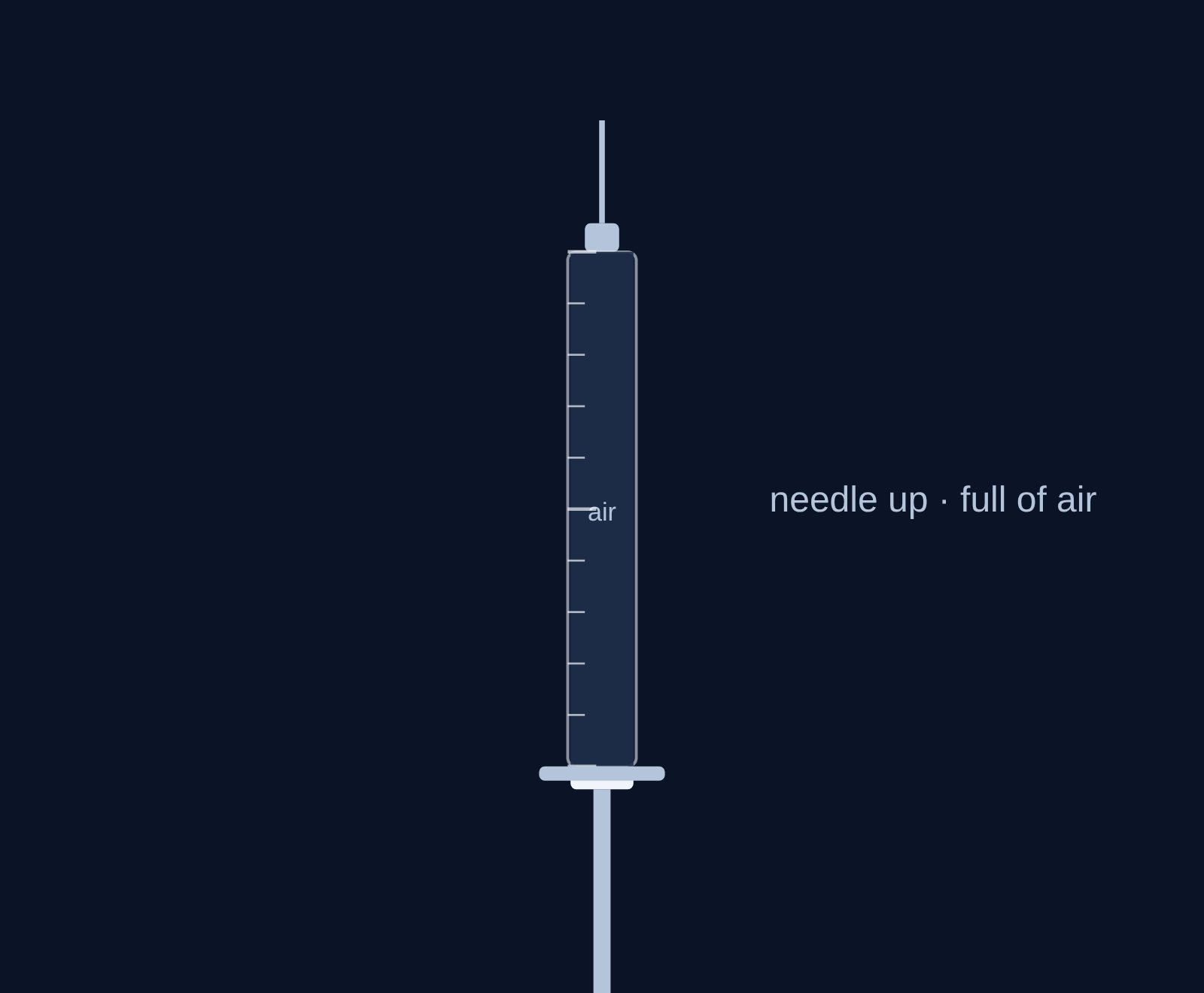
Pull air into your 100-unit syringe
Hold your 100-unit insulin syringe with the needle pointing up and pull the plunger back to 100 units, filling it with air. It holds 100 units (1 mL), so adding all 2 mL takes 2 fills: 100 units each.
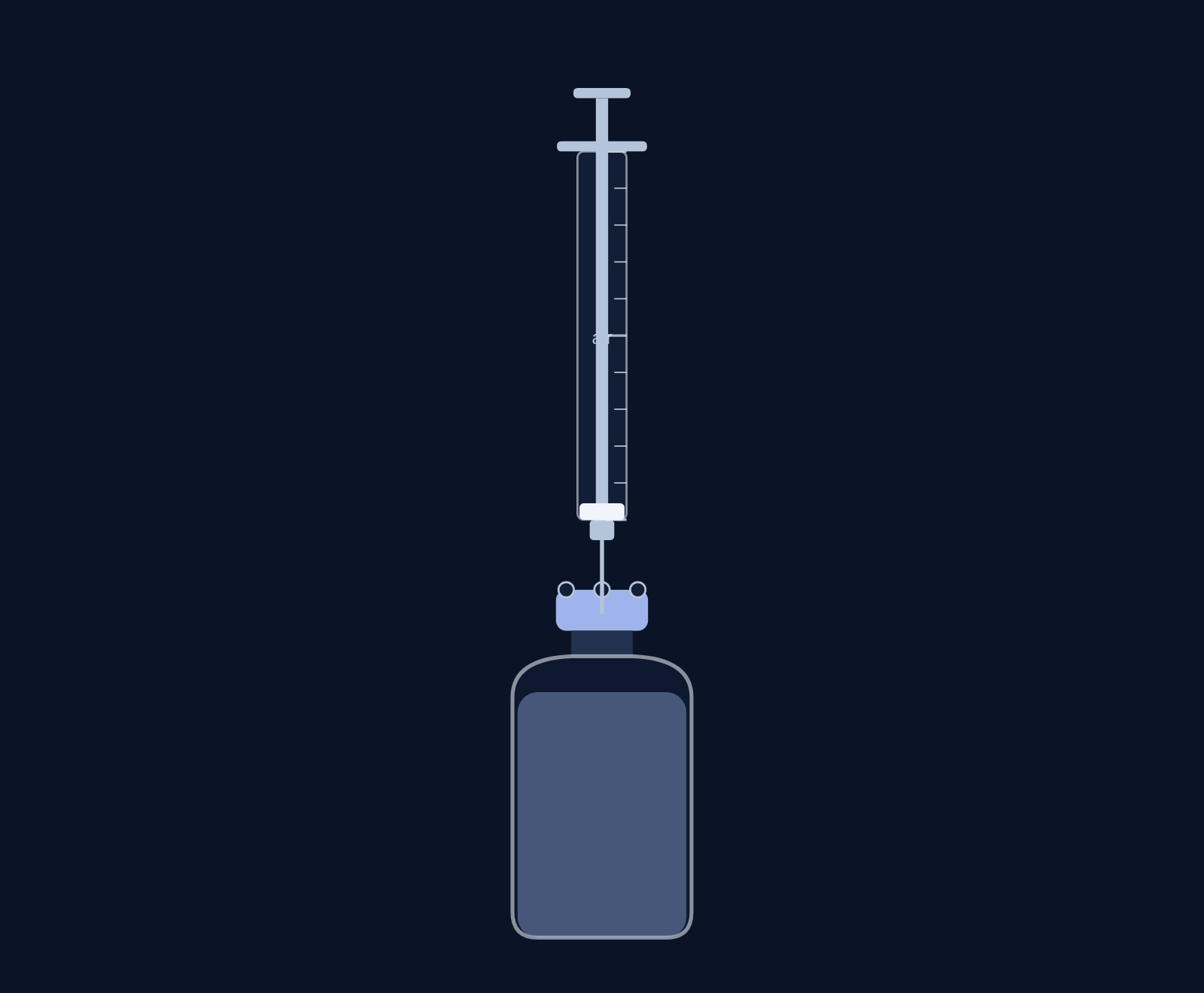
Push all the air into the water vial
With the water vial upright, push the needle straight through the center of the rubber top and push all the air in.
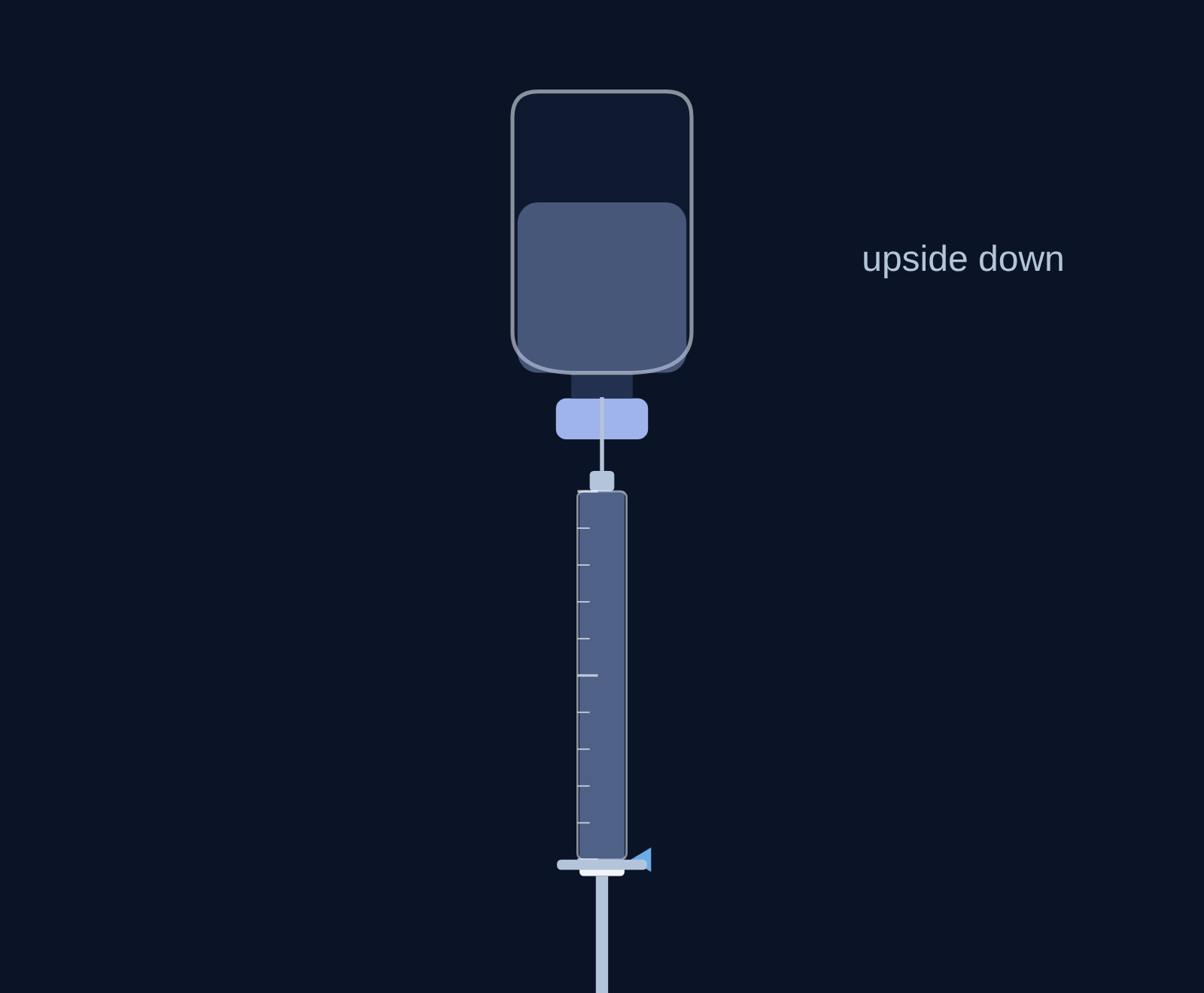
Turn it upside down and load 100 units
With the syringe still in, turn the vial upside down. The air you added pushes the water into the syringe; ease the plunger to 100 units with the needle tip under the water, then pull the needle out.
Add the water down the side
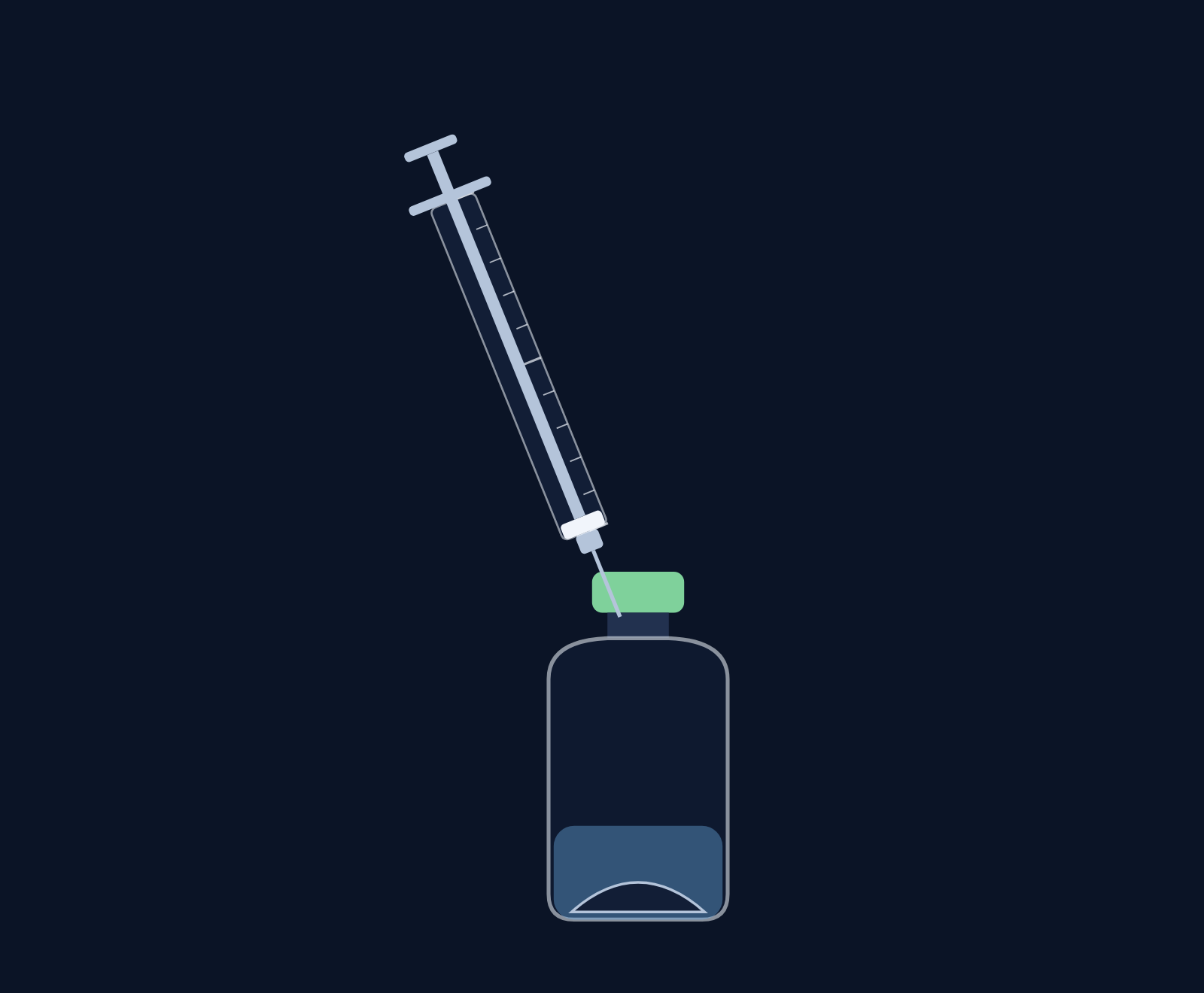
Insert the needle into your peptide vial at an angle and push slowly so the water runs down the glass. Don't spray it straight onto the powder. Repeat steps 2–5 until you've added 2 mL: 100 units each (2 in all), using the same syringe. Keep count as you go.
Swirl gently until clear
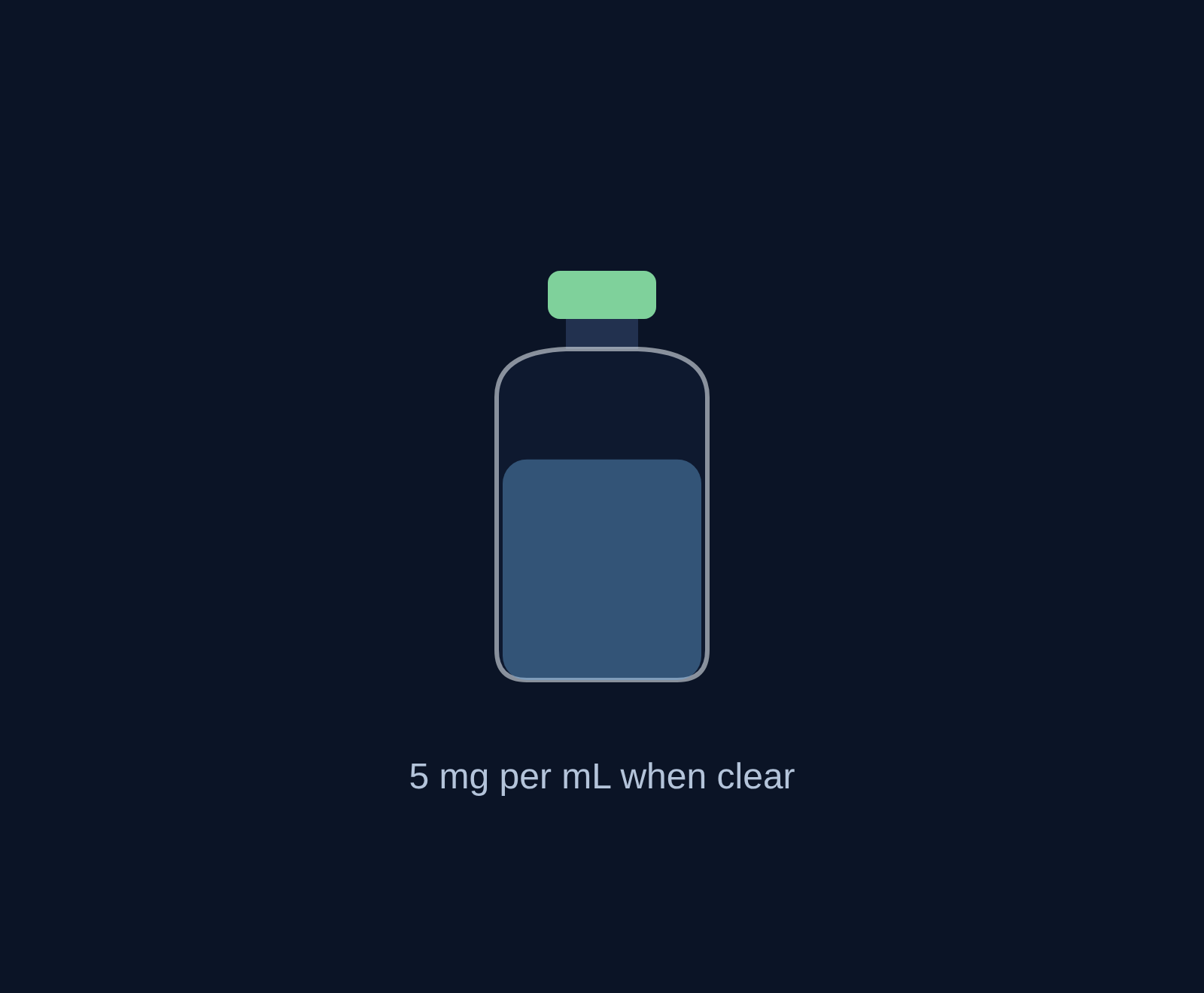
Roll the vial between your fingers or swirl it slowly. Don't shake it. Wait until no powder is left, then write today's date on the label and refrigerate.
Part 2: Work out your units
Once it's mixed, every mL holds the same amount of peptide. Units on a U-100 syringe are hundredths of a mL, so:
volume per dose = dose ÷ concentration → 1 mg ÷ 5 = 0.2 mL
units to draw = volume × 100 → 0.2 × 100 = 20 units
Different vial or water amount? The free reconstitution calculator does this for any numbers and shows the mark on a syringe. The most common mistake is mixing up mg and mcg: 1 mg = 1,000 mcg.
Part 3: Draw your dose
Wipe the top
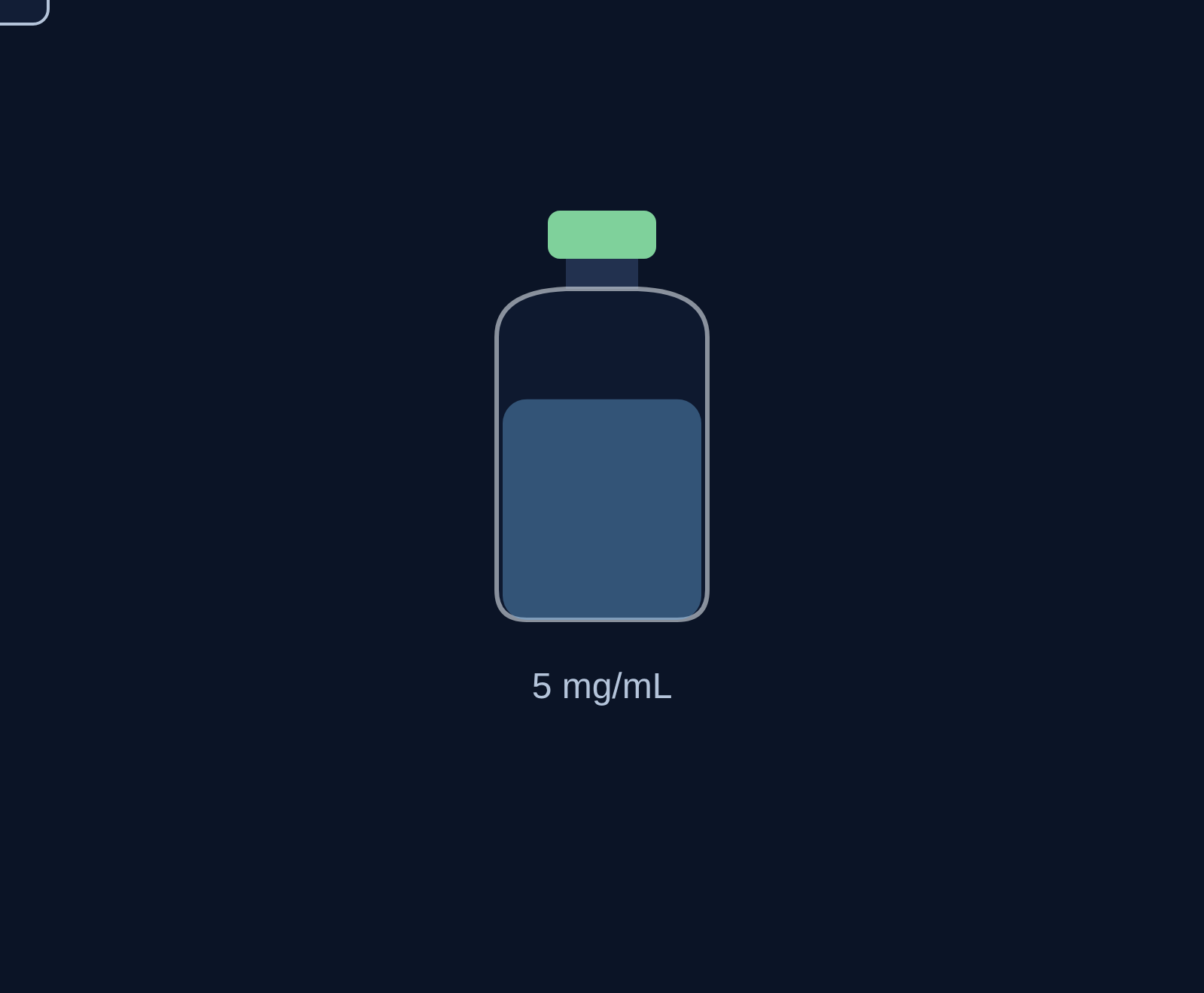
Clean the rubber top of your mixed peptide vial with an alcohol swab and let it dry.
Pull the plunger all the way back
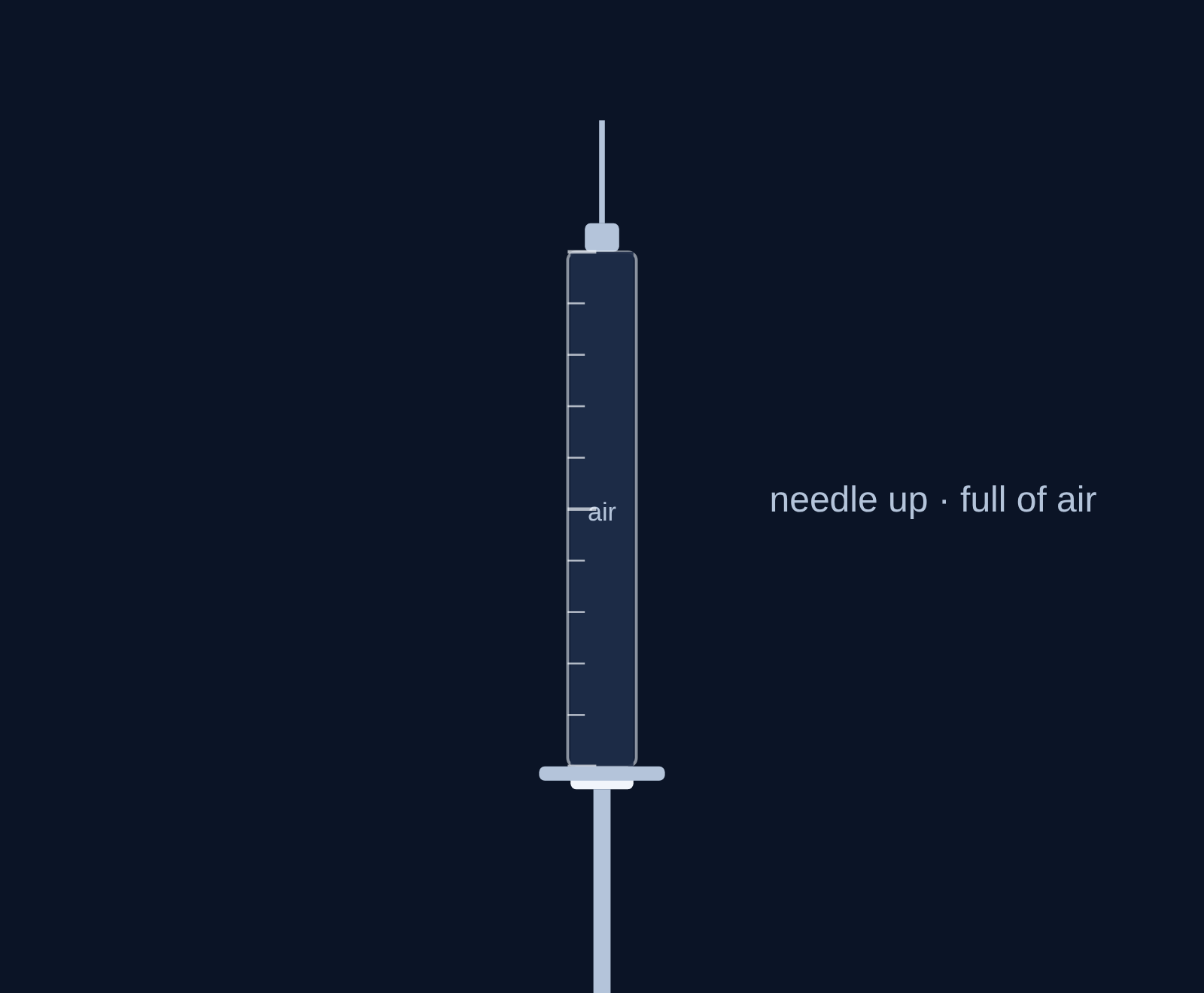
Hold your 100-unit syringe with the needle pointing up and pull the plunger all the way back, filling it with air.
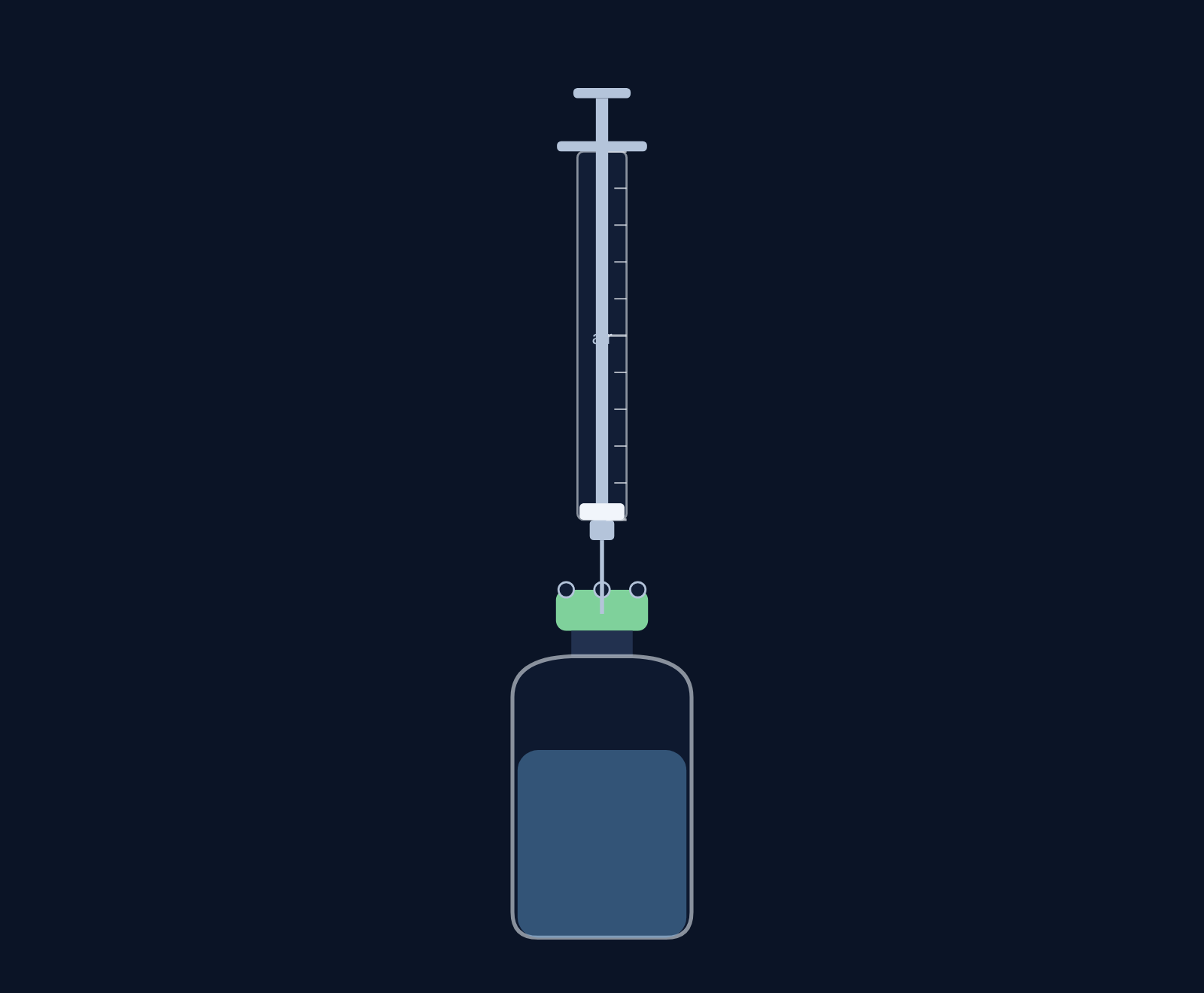
Push all the air into the vial
With the vial upright, put the needle through the center of the top and push all the air in.
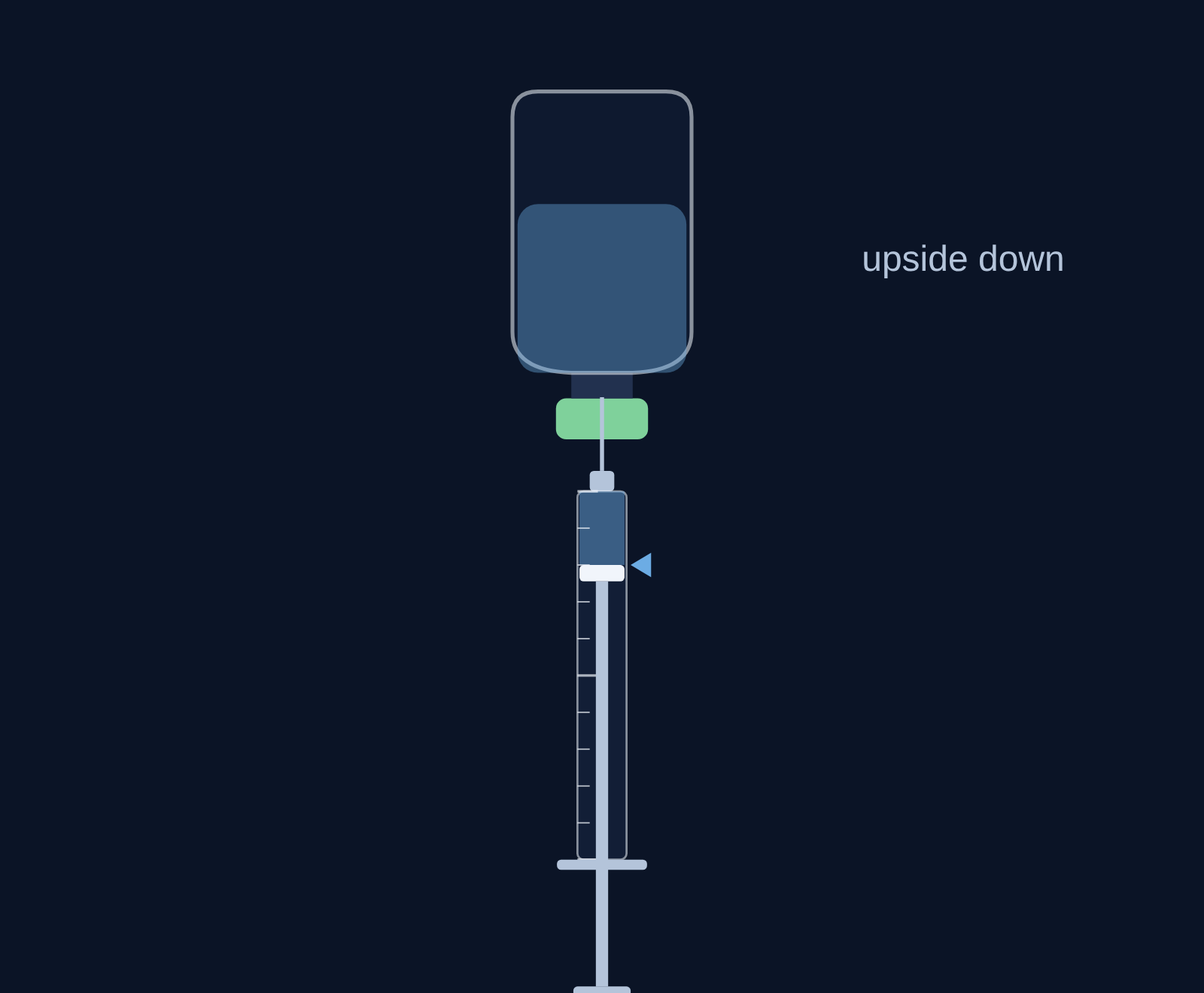
Turn it upside down and load to 20
With the syringe still in, turn the vial upside down. The air you added pushes the liquid in; ease the plunger to 20 units (0.2 mL = 1 mg) with the needle tip in the liquid.
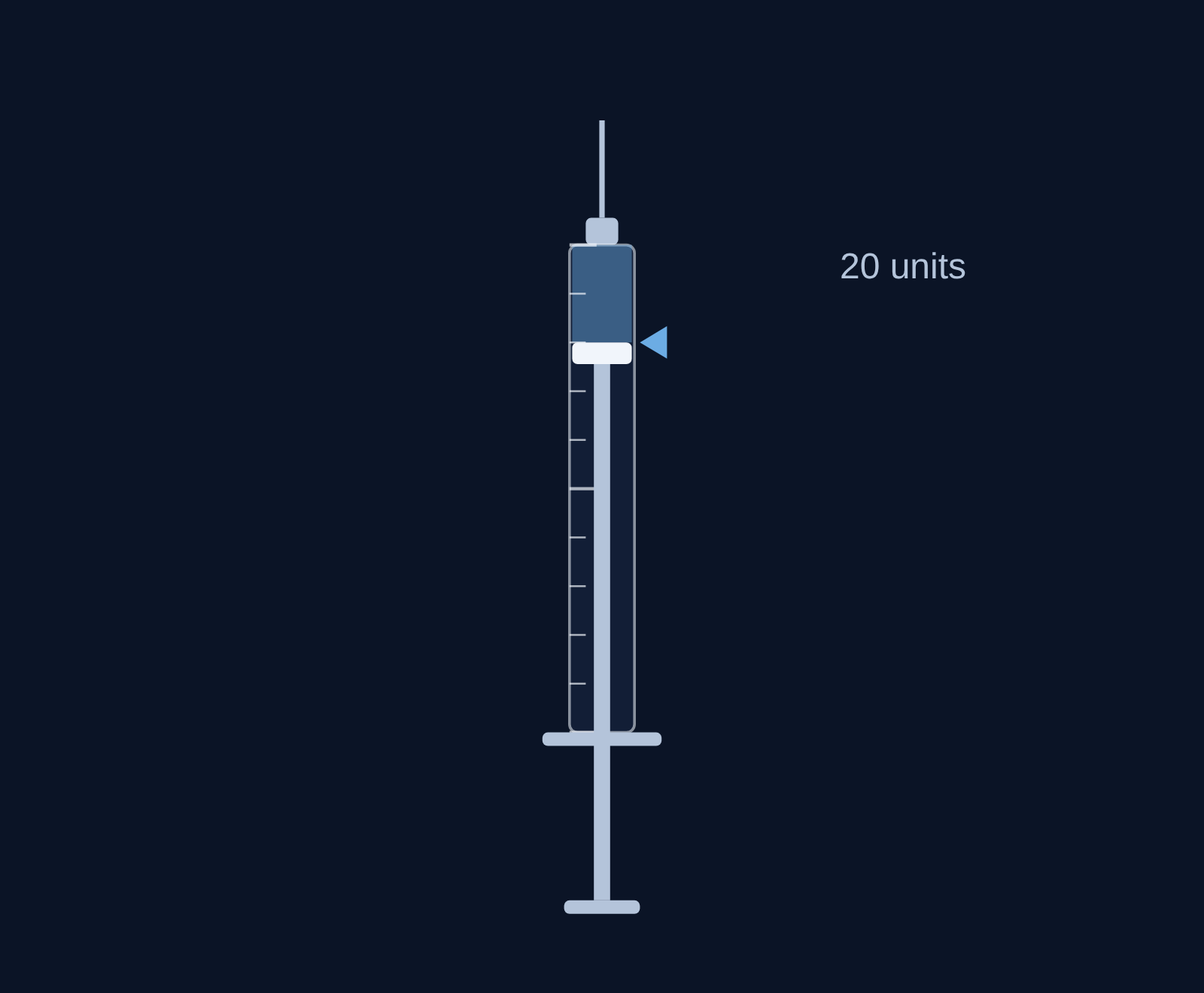
Check the line
Pull the needle out and check that the top edge of the plunger sits exactly on 20. That's your dose.
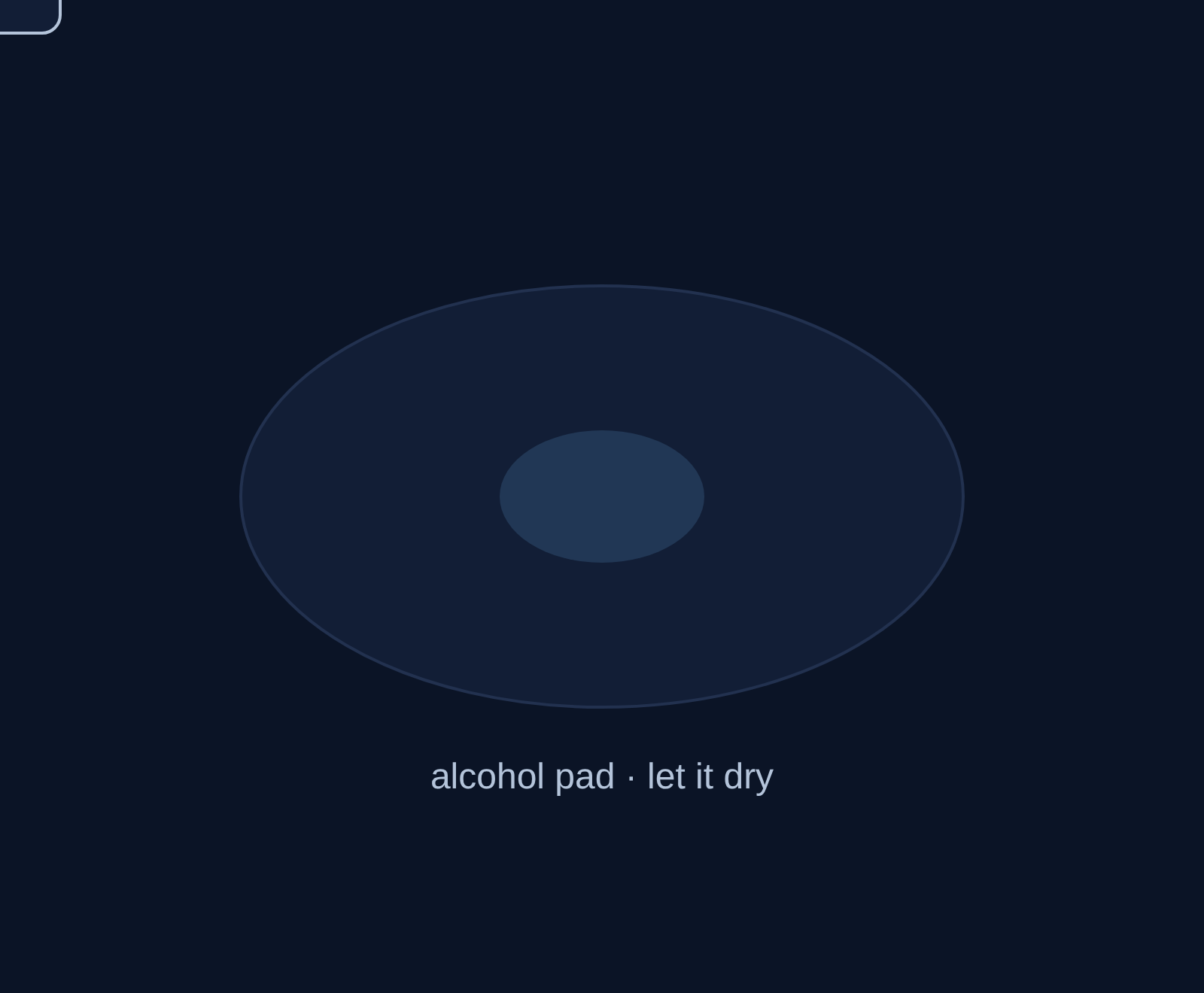
Clean the injection site
Wipe the injection site with a fresh alcohol pad and let it air-dry before you inject.
Reading a U-100 syringe
On every U-100 insulin syringe, 1 unit = 0.01 mL and 100 units = 1 mL. A 0.5 mL syringe holds 50 units and a 0.3 mL syringe holds 30, but each unit is the same size. So the units for a dose never depend on which syringe size you use, only on how your vial was mixed.
Never do the math again
In the PepKeep app, these guides play step by step with your own vial and water amounts, and every dose reminder shows the exact units to draw. Your vials count down as you log, so you know when to reorder.
Questions
How do you reconstitute a peptide vial?
Wipe both rubber tops, fill an insulin syringe with air, push the air into the bacteriostatic water vial, turn it upside down and draw the water, then add it slowly down the side of the peptide vial. Swirl gently until clear, date the label and refrigerate.
How much bacteriostatic water should I add?
Any amount that makes your dose easy to read on your syringe. More water means more units per dose; the amount of water never changes how many doses are in the vial. Use the reconstitution calculator to see where your dose lands.
Should I shake the vial after adding water?
No. Roll it between your fingers or swirl it slowly until the powder is fully dissolved.
How many units is my dose?
Divide the peptide in the vial by the water added to get mg per mL, divide your dose by that to get mL, and multiply by 100 for units on a U-100 syringe.
Is this medical advice?
No. This guide shows technique and arithmetic only. It doesn't recommend compounds or doses; follow your own protocol and clinician.
Let PepKeep do this math for you, every day.
Reminders with the exact units to draw, vials that count down, and your real cost per shot, month and year. iPhone, Android and desktop.
Start your 7-day free trialNo card needed to start.